A Technical Audit of Alpine Hardware: How to Compare Ski Gear (2026)
The acquisition of Alpine equipment has transitioned from a straightforward purchase of utility into a sophisticated exercise in systems integration. For the contemporary winter athlete, the challenge lies not in the scarcity of high-quality tools but in the overwhelming density of technical specifications that often obscure the actual performance characteristics of the hardware. To properly evaluate these systems, one must look beyond the cosmetic iterations of seasonal product cycles and examine the underlying physics of snow interaction, energy transfer, and thermal regulation.
Modern gear development is increasingly defined by the “lightweight vs. dampening” paradox. Manufacturers are locked in a persistent struggle to reduce the mass of skis and boots—a requirement for the growing market of human-powered backcountry exploration—while attempting to retain the vibration-killing stability of traditional, metal-heavy alpine constructions. This tension creates a complex landscape for the consumer, where the “best” equipment is no longer a fixed benchmark but a moving target dependent on the specific kinetic demands of the individual and the unique crystalline structure of the local snowpack.
Establishing a definitive reference for equipment requires an analytical framework that treats the skier as a single mechanical unit. The interaction between the boot’s flex profile, the binding’s elastic travel, and the ski’s torsional rigidity must be viewed as a unified chain of command. A failure or mismatch in any single link of this chain renders the entire system inefficient. This inquiry seeks to provide the structural depth necessary to navigate these variables, offering an editorial perspective that prioritizes long-term utility and mechanical honesty over the transient narratives of the retail market.
Understanding “compare ski gear”
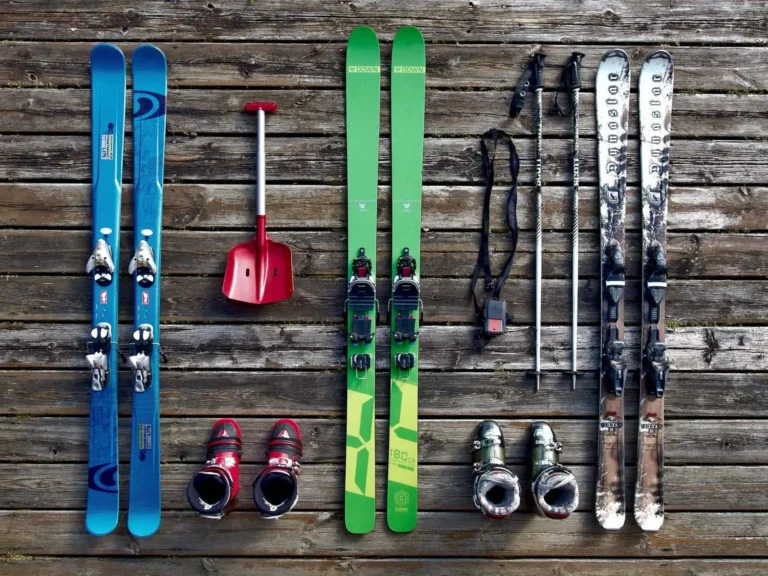
When users attempt to compare ski gear, they frequently fall into the trap of isolated variable analysis. They look at the weight of a boot or the radius of a ski in a vacuum, ignoring how these metrics interact with the user’s biomechanics. To truly compare these systems, one must adopt a multi-perspective approach that accounts for “compatibility friction.” This is the invisible loss of performance that occurs when, for example, a high-stiffness carbon ski is paired with a low-performance, soft-flexing rental boot.
The most common oversimplification in the market is the reliance on “stiffness” as a universal proxy for quality. While a higher flex rating often correlates with more expensive materials, it can be a significant liability for a lighter skier who lacks the mass to engage the ski’s sidecut. A valid comparison must therefore weigh the “aspirational performance” of a product against its “accessible performance.”
Furthermore, the environment dictates the relevance of specific metrics. Comparing the edge-hold of two different carving skis is a productive exercise for an athlete in the icy conditions of the American Northeast, but the same comparison is largely irrelevant for a deep-snow specialist in Japan. A sophisticated comparison strategy recognizes that hardware is regional; what constitutes a “flagship” setup in one mountain range may be functionally obsolete in another.
The Historical Trajectory of Alpine Materials
The evolution of ski gear is a history of managing vibration. Early wooden planks were naturally damp but lacked the structural integrity to hold an edge on hard-pack snow. The introduction of the aluminum-core “Head Standard” in the mid-20th century revolutionized durability, but it wasn’t until the fiberglass and “sandwich” construction era that designers could truly tune the longitudinal and torsional flex of the ski independently.
Today, we are witnessing a “chemical” revolution. We are moving beyond simple wood and metal into the realm of viscoelastic polymers and bio-resins that mimic the dampening qualities of heavy rubber without the weight penalty. This historical context is vital; it helps the user understand that the current “perfection” of gear is merely a snapshot in a long-term trajectory of aerospace-inspired material science.
Mental Models for Equipment Selection
To effectively compare ski gear, we can apply specific frameworks that simplify complex data into actionable logic.
1. The Power-to-Weight Equilibrium
Every gram removed from a setup increases efficiency on the uphill but typically increases “chatter” or instability at high speeds.
-
The Frame: Determine if your primary failure mode is fatigue during the climb or instability during the descent.
2. The Elasticity of Connection
Bindings are often the most overlooked component. High-end bindings offer greater “elastic travel”—the ability of the boot to move slightly without releasing.
-
The Frame: View the binding not as a safety release, but as a suspension system for your legs.
3. The Thermal Barrier Logic
In apparel, the goal is not “warmth” but “moisture management.” A plan that focuses only on insulation will fail during high-output activity.
-
The Frame: Prioritize the “dryness” of the base layer over the “thickness” of the outer shell.
The Taxonomy of the Performance Chain
The following table serves as a foundational reference to categorize the primary trade-offs in the current hardware landscape.
| Category | Primary Metric | High-Performance Trade-off | Target Environment |
| Frontside/Race | Torsional Rigidity | Minimal vibration; high weight | Injected ice; groomed trails |
| All-Mountain | Versatility | Compromised edge-to-edge speed | 60% Groomed / 40% Variable |
| Freeride/Big Mtn | Surface Area | Significant mass; slow turn initiation | Steep bowls; uncompressed snow |
| TouringFreee tour | ram Count | High chatter; lower durability | Untracked backcountry |
Realistic Decision Logic
When evaluating these categories, the user must define their “80% terrain.” Most buyers optimize for the 5% of their season spent in deep powder, resulting in a setup that is cumbersome and inefficient for the 80% of the time they spend on packed snow.
Real-World Scenarios and Operational Constraints
Scenario A: The Multi-Continental Traveler
-
Constraint: Strict airline weight limits and unpredictable regional snow.
-
The Decision: A mid-waisted (95mm-100mm) ski with a “hybrid” binding that allows for both resort and backcountry use.
-
Second-Order Effect: Increased wear and tear on the binding mechanism due to more complex moving parts.
Scenario B: The Aging Technical Skier
-
Constraint: Reduced joint resilience and desire for high-speed stability without the weight of traditional race gear.
-
The Decision: A ski utilizing basalt or flax fibers rather than heavy Titanal sheets.
-
Failure Mode: These materials may “wash out” or lose grip on pure blue ice compared to traditional metal laminates.
Economics of the Alpine Investment
The financial planning for a complete gear overhaul requires a tiered understanding of depreciation and lifecycle.
| Asset Class | Expected Lifespan | Cost Range (USD) | Residual Value |
| Skis (Core) | 100 – 150 Days | $750 – $1,300 | Low (Technological decay) |
| Boots (Shells) | 5 – 8 Years | $500 – $900 | Moderate (If liners replaced) |
| Safety Gear | 5 Years (Electronic) | $400 – $600 | Variable (Safety standards change) |
| Outerwear | 3 – 5 Years | $300 – $800 | Low (DWR coating failure) |
Opportunity Cost Analysis: Renting high-end “demo” skis allows for a much lower capital expenditure for the occasional traveler, but prevents the “muscle memory” development that comes with owning and mastering a consistent set of tools.
Support Systems and Technical Integration
Hardware alone does not constitute a system. The integration layer includes:
-
Boot Fitting/Canting: The alignment of the boot cuff to the skier’s natural leg geometry.
-
Base Structure: The physical pattern ground into the ski base to break suction in wet snow.
-
DIN Calibration: The precision setting of binding release values based on weight, height, and age.
-
Thermal Layering: The interaction between Merino wool and GORE-TEX membranes.
The Risk Landscape: Failure Modes in Acquisition
The primary risk when you compare ski gear is the “Echo Chamber Effect,” where marketing buzzwords (e.g., “aerospace grade,” “unmatched power”) distract from fundamental design flaws.
-
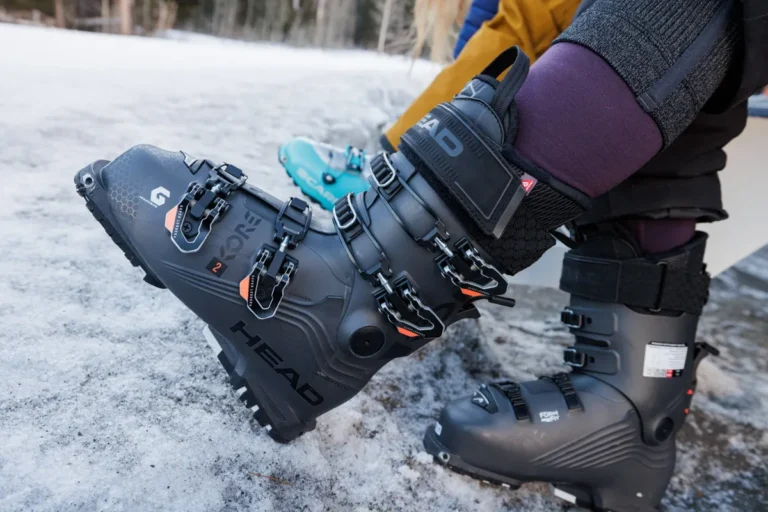
The Stiff Boot Trap: Buying a 130-flex boot for “performance” when the user lacks the ankle mobility to flex the plastic, leading to chronic back pain.
-
The Over-Width Trap: Buying a 115mm powder ski for a resort that hasn’t seen fresh snow in three weeks, leading to excessive lateral stress on the knees.
-
The Technical Debt of Maintenance: High-end gear requires professional tuning. Buying expensive skis and never sharpening the edges is a waste of the initial capital.
Governance, Maintenance, and Lifecycle Adaptation
Performance is not static. A comprehensive plan for gear includes a “review cycle” to ensure the equipment still matches the user’s evolution.
The Seasonal Maintenance Checklist
-
Post-Season: Apply a thick layer of “storage wax” to prevent the bases from oxidizing and drying out.
-
Pre-Season: Inspect boot soles for wear; a worn sole can compromise the binding’s release consistency.
-
Mid-Season: Professional edge sharpening every 10-15 days to maintain “bite” on hard-pack.
Adjustment Triggers
If you consistently find yourself “falling into the mountain” or struggling to initiate turns, it may not be a technique issue—it may be time to check the “base bevel” of your skis or the “forward lean” of your boots.
Metrics of Performance: Quantitative vs. Qualitative
How do we measure if the comparison was successful?
-
Leading Indicator: The absence of mid-turn “skidding” on firm surfaces.
-
Lagging Indicator: The total vertical feet achieved in a season without equipment-related injury.
-
Qualitative Signal: The “psychological confidence” of knowing the gear will respond predictably in a high-consequence environment.
Systemic Misconceptions and Industry Myths
-
“Carbon is Always Better”: Carbon is exceptionally light, but it can be “pingy” and reactive. Many experts still prefer the “quiet” feel of high-quality poplar or ash wood cores.
-
“Long Skis are for Experts”: Modern “rockered” skis have a shorter effective edge; a 185cm rockered ski might feel as short and maneuverable as a 170cm traditional ski.
-
“Waterproof means Breathable”: This is a spectrum, not a binary. In high-humidity environments, even the most expensive GORE-TEX will “wet out” if not properly cleaned and retreated.
The Synthesis of Choice
The process to compare ski gear is ultimately an attempt to achieve “transparency.” The best equipment is that which disappears beneath the user, allowing for a direct, unmediated connection to the mountain. This requires a rejection of the “one-size-fits-all” narrative and an embrace of the specific, often messy, reality of individual needs. By treating hardware as an integrated system and maintaining it with professional rigor, the skier ensures that their equipment remains an asset rather than a liability.