Strategic Alpine Management: How to Manage Ski Maintenance (2026)
How to Manage Ski Maintenance. The relationship between a skier and their equipment is fundamentally an exercise in mechanical trust. On a high-altitude gradient, where surface conditions can transition from soft wind-drift to injected ice in a matter of meters, the physical integrity of a ski’s base and edge determines the boundary between controlled deceleration and systemic failure. To treat alpine hardware as a maintenance-free consumer good is a profound misunderstanding of the materials science involved. Modern skis are high-tension composite sandwiches, sensitive to thermal fluctuations, moisture ingress, and the abrasive reality of crystalline snow.
Strategic equipment management requires a shift from a reactive mindset—fixing what is broken—to a proactive governance model. This involves an understanding of “base planarity,” the molecular structure of polyethylene bases, and the specific bevel angles required to maintain grip without sacrificing maneuverability. When we analyze the lifecycle of these tools, we see that performance degradation is often invisible to the untrained eye, manifesting instead as increased physical fatigue, inconsistent turn initiation, or a subtle loss of “pop” in the ski’s core.
The following analysis establishes a definitive reference for the preservation and optimization of alpine assets. By moving beyond the superficial “wax and sharpen” narrative, this inquiry examines the second-order effects of various maintenance strategies and the economic logic of equipment lifecycle management. The goal is to provide a technical blueprint for those who view their equipment not as seasonal accessories, but as precision instruments that require rigorous, data-driven oversight.
Understanding “how to manage ski maintenance”
The term “maintenance” is frequently oversimplified as a synonymous descriptor for basic tuning. In a professional editorial context, knowing how to manage ski maintenance involves a multi-dimensional strategy that balances structural preservation with performance tuning. It is a process of managing the “useful life” of the materials, acknowledging that every pass of a file or a stone-grinder removes a finite amount of material. The objective is to maintain the highest possible performance ceiling while extending the asset’s lifespan.
A primary misunderstanding in this domain is the belief that maintenance is solely about speed. While a well-waxed base reduces friction, the more critical function of maintenance is “predictability.” A ski with inconsistent edge bevels or a “railed” base (where the edges are higher than the base material) will exhibit erratic behavior mid-arc. This unpredictability forces the skier to compensate with excessive muscular input, leading to premature fatigue and a higher risk of orthopedic injury.
Oversimplification also occurs when owners rely exclusively on “end-of-season” servicing. Effective management requires a continuous monitoring cycle. The crystalline structure of snow acts as a micro-abrasive; after just a few days of high-speed operation, the base material undergoes “base burn,” where the polyethylene fibers become scorched and lose their ability to hold wax. Therefore, a robust maintenance plan is not a seasonal event but an operational constant, integrated into the very rhythm of the skiing tenure.
The Evolution of Alpine Material Preservation
Historically, ski maintenance was a primitive craft. Wooden skis required heavy tar treatments to repel moisture and prevent warping. The transition to plastic (P-tex) bases and steel edges in the mid-20th century revolutionized the sport but introduced new chemical challenges. Early P-tex was “extruded,” meaning it was essentially a solid sheet of plastic. Modern high-performance skis use “sintered” bases, which are created by crushing polyethylene pellets under high pressure to create a porous structure capable of absorbing wax.
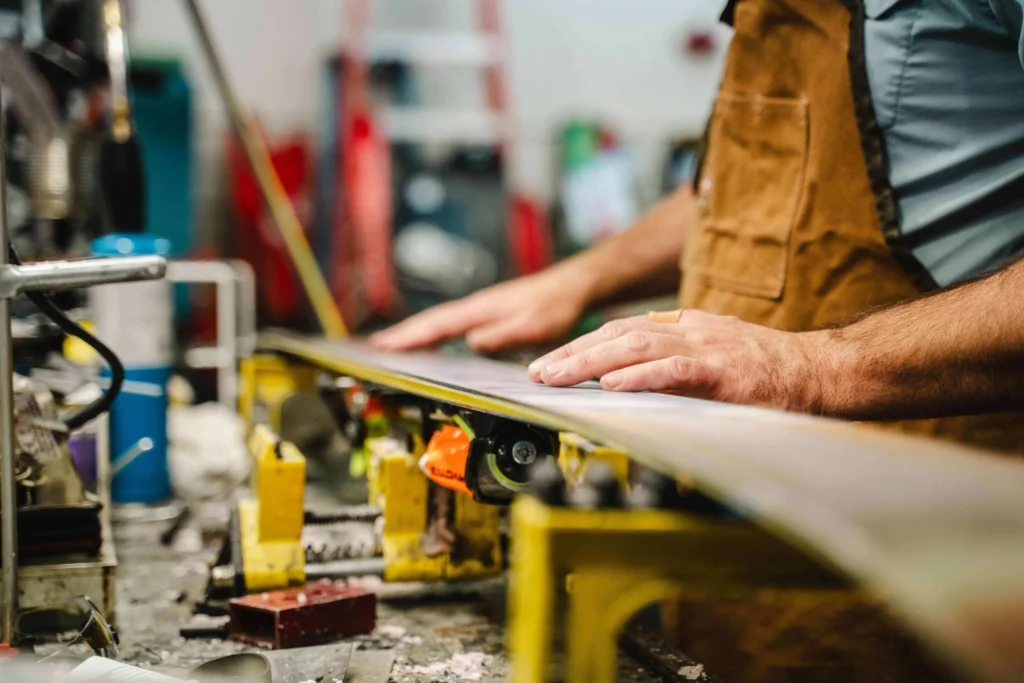
This evolution shifted the maintenance focus from moisture-proofing to “thermal management.” Waxing is not just applying a coating; it is a process of using heat to open the pores of the sintered base to allow deep penetration. Furthermore, the introduction of “Titanal” (a high-strength aluminum alloy) into the ski’s internal layers has changed how we treat structural damage. A deep scratch that reaches the metal or wood core is no longer a cosmetic issue but a structural threat that can lead to delamination if moisture is allowed to seep in and freeze.
Conceptual Frameworks for Technical Oversight
To navigate the complexities of hardware preservation, three primary mental models should be applied.
1. The Material Depletion Model
Every maintenance action has a cost in material. A stone grind restores the base but makes the ski thinner.
-
The Frame: Use the least invasive method necessary. If a base can be restored with a copper brush and a fresh wax cycle, avoid the grinder.
2. The Hydrophobic/Hydrophilic Toggle
Snow is not a static surface; it is a substance in a constant state of phase-change.
-
The Frame: Maintenance must adapt to the “moisture content” of the snow. Cold, dry snow requires harder waxes to resist abrasion; warm, wet snow requires “structured” bases to break the suction of the water film.
3. The Geometric Integrity Framework
A ski is only as effective as its angles. Even a 0.5-degree deviation in a side-bevel can change the “bite” point of the ski.
-
The Frame: Treat the edge geometry as a fixed engineering specification that must be audited with precision tools, not estimated by hand.
Taxonomy of Maintenance Modes and Variations
A strategic approach requires categorizing maintenance based on the intensity of the operational environment.
| Maintenance Tier | Primary Focus | Frequency | Required Tools |
| Operational (Daily) | Edge burr removal & drying | Post-session | Diamond stone, towel |
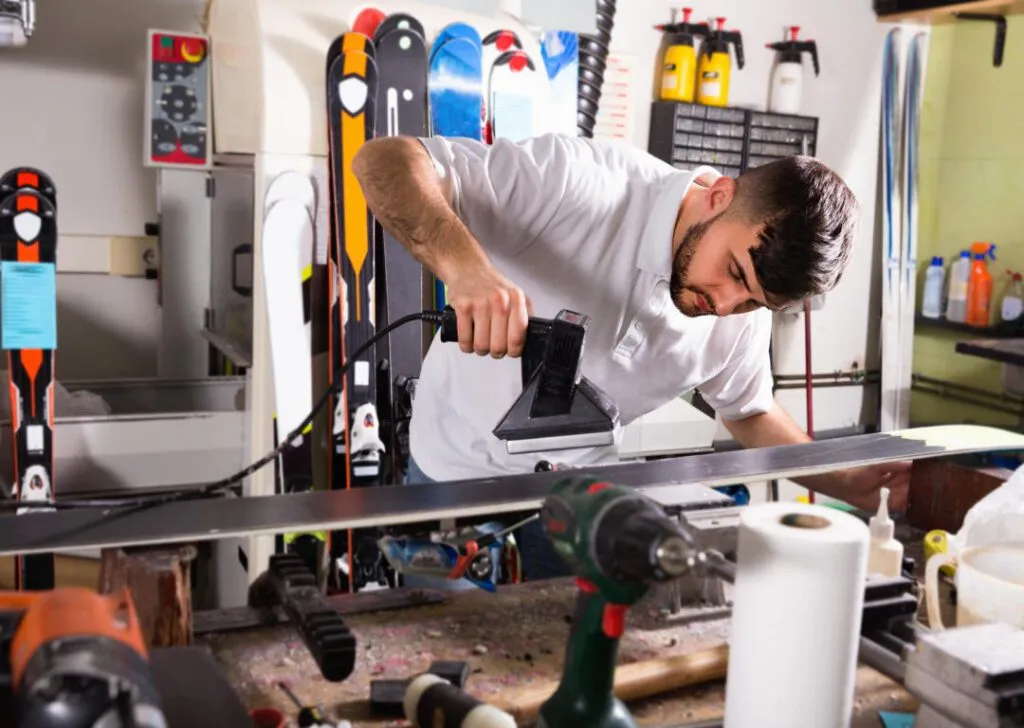
| Tactical (Weekly) | Wax saturation & minor P-tex | Every 3-5 days | Iron, scraper, brushes |
| Strategic (Seasonal) | Stone grind & edge reset | 1-2 times per year | Professional shop machinery |
| Restorative | Core shot repair & delamination | As needed | Epoxy, base-welding iron |
Realistic Decision Logic
If the skier is operating on “man-made” snow (which is essentially ground-up ice), the frequency of “Tactical” maintenance must double. The abrasive nature of artificial crystals strips wax significantly faster than natural, high-altitude powder.
Real-World Scenarios and Failure Constraints
Scenario A: The “Dry Base” Failure
-
Context: A skier ignores waxing for an entire week in cold, dry Colorado conditions.
-
Result: The base becomes “white” and fuzzy (oxidation). The ski feels “draggy,” and the skier begins to lean back to find speed, causing quad failure.
-
Second-Order Effect: The oxidized base becomes “hydrophobic” in the wrong way—it no longer absorbs wax, requiring a stone grind to reveal “fresh” plastic.
Scenario B: The “Burred Edge” Deviation
-
Context: Hitting a hidden rock (“shark”) in the early season.
-
Result: A hardened “burr” forms on the steel edge. When the skier tries to turn, this burr catches, causing the ski to “track” unexpectedly.
-
Decision Point: A file will “skate” over a hardened burr. The skier must use a diamond stone first to “de-work-harden” the steel before a file can reshape it.
Economics: Resource Allocation and Opportunity Costs
The financial logic of knowing how to manage ski maintenance involves weighing the cost of tools against the “cost per day” of the ski.
| Expense Category | Home Setup (USD) | Shop Service (USD) | Long-Term Impact |
| Basic Tuning | $150 (initial tools) | $40 – $60 / visit | Extends life by 30-50% |
| Major Repair | $50 (materials) | $80 – $120 | Prevents total asset loss |
| Stone Grinding | N/A | $50 – $100 | Essential for planarity |
Opportunity Cost: Spending two hours tuning at home may seem inefficient, but the “opportunity cost” of a failed ski day due to dull edges on an icy morning is significantly higher, often involving the cost of a lift ticket and travel.
Tools, Strategies, and Support Systems
A high-functioning maintenance environment requires specific technical support.
-
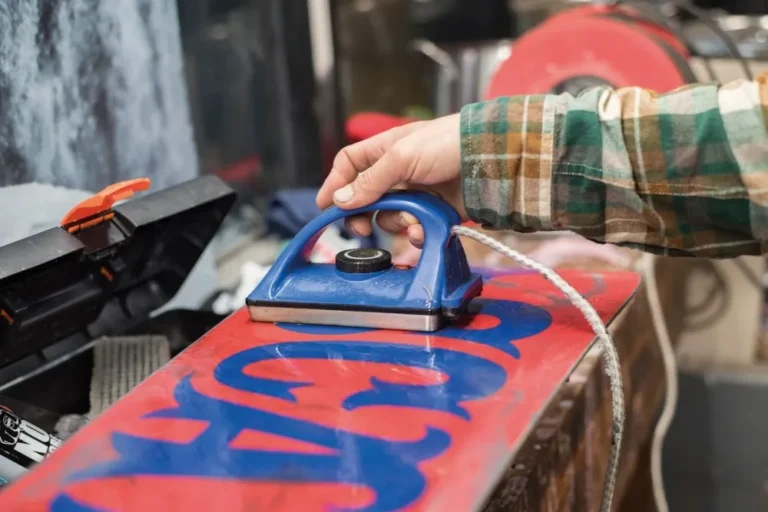
The Waxing Iron: Must have a thick base plate to maintain constant temperature; fluctuating heat can “seal” the base pores or, worse, “cook” the core resins.
-
True Bar: A precision-ground steel bar used to check if the base is concave or convex.
-
Diamond Stones: Essential for “polishing” rather than just “cutting” the edge; a polished edge stays sharp longer.
-
Base Cleaners vs. Hot Scraping: Use “hot scraping” (applying wax and scraping while warm) to pull dirt out of the pores without using harsh chemicals that dry out the P-tex.
-
Sidewall Planners: To sharpen an edge effectively, the plastic “sidewall” must often be trimmed back so it doesn’t interfere with the file.
The Risk Landscape: Compounding Failure Modes
The primary risk in maintenance is the “Over-Tuning Loop.” A skier, noticing a lack of grip, continues to sharpen the side-edge without checking the base-bevel. Eventually, the edge becomes “base-high,” meaning the ski has to be tipped at an extreme angle before the edge even touches the snow.
-
Taxonomy of Compounding Risks:
-
Thermal Damage: Overheating the base leads to “delamination” (the layers of the ski separating).
-
Structural Weakness: Over-filing reduces the “edge-width,” making it more likely to “blow out” when hitting a rock.
-
Rust Contamination: Storing wet skis allows rust to pit the steel, requiring significant material removal to fix.
-
Governance, Adaptation, and Review Cycles
To ensure long-term equipment health, a “Governance Checklist” should be followed.
The 20-Day Audit
-
Planarity Check: Use a true-bar to ensure the base hasn’t become “railed.”
-
Binding Lubrication: Check that the AFD (Anti-Friction Device) is clean and the spring tension (DIN) is consistent.
-
Structure Review: Has the “stone-ground pattern” in the base been worn smooth? If so, the ski will suffer from “suction” in warm snow.
The Storage Protocol
-
Spring Transition: Clean the bases thoroughly. Apply a “thick” layer of soft, low-temperature wax (unscraped). This “storage wax” prevents oxidation and keeps the edges from rusting during the humid summer months.
Metrics of Performance: Tracking Utility
How does one quantitatively measure the success of a maintenance plan?
-
Leading Indicator: The number of “wax cycles” performed.
-
Lagging Indicator: The total “edge-life” remaining (measured in millimeters).
-
Qualitative Signal: The “sound” of the ski on hard-pack. A well-tuned ski is quiet; a vibrating or “chattering” ski often signals an edge or planarity issue.
Common Misconceptions and Industry Myths
-
“New Skis are Ready to Use”: Most factory tunes are “average.” To get the intended performance, a “new” ski usually needs a base-flattening and a specific bevel reset to match the skier’s style.
-
“You Can’t Over-Wax”: While you can’t damage the base with too much wax, you can waste money.
-
“Machine Waxing is the Same as Hand Waxing”: Roller-waxing in shops only coats the surface. Hand-waxing with an iron allows for the “dwell time” necessary for the pores to absorb the wax.
The Synthesis of Technical Readiness
Ultimately, mastering how to manage ski maintenance is about reducing the variables between intent and execution. When the hardware is in a state of technical perfection, the skier is free to focus entirely on the tactical challenges of the mountain. Maintenance is not a chore; it is the “governance” of performance. By treating the ski as a precision instrument, the practitioner ensures that their equipment remains an enabler of discovery rather than a bottleneck of frustration.