The Definitive Architecture of Performance: Best Ski Options for 2026
Best Ski Options. Selecting the appropriate equipment for alpine environments has evolved from a matter of simple utility into a complex intersection of materials science, biomechanics, and topographical study. The modern landscape of snow sports equipment is no longer defined by a linear “good-better-best” hierarchy. Instead, it is a matrix of trade-offs where gains in dampening and high-speed stability almost universally necessitate a loss in low-speed maneuverability or weight efficiency. To find the most effective solution, one must look past the aesthetic veneers and marketing nomenclature to understand how a ski interacts with various snow crystals and slope gradients.
The current market is saturated with specialized tools designed for hyper-specific niches—ranging from the featherweight demands of technical ski mountaineering to the massive surface area required for deep maritime snowpacks. This fragmentation means that a “flagship” ski for one user may be entirely dysfunctional for another. The process of evaluation requires an analytical approach that weighs the physical properties of the ski—its sidecut radius, effective edge, torsional rigidity, and camber profile—against the intended environment and the kinetic input of the individual.
This inquiry moves beyond the surface-level “buyer’s guide” format. It seeks to establish a comprehensive intellectual framework for evaluating equipment. By examining the systemic evolution of ski design and the second-order effects of various construction materials, we can develop a more sophisticated understanding of what constitutes a high-performance choice. The following analysis serves as a pillar of information for those who require technical depth and a refusal to settle for oversimplified categorization.
Understanding “best ski options”
The term “best” is a linguistic trap in the context of technical hardware. In skiing, “best” is not an intrinsic property of the object but a relational value. When analyzing best ski options, one must account for the reality that every design choice is a compromise. A ski that excels at carving on injected ice (the “best” for a racer) will be a liability in three feet of uncompressed powder (the “worst” for a freerider).
Common misunderstandings often stem from the “quiver-of-one” myth. This is the idea that a single pair of skis can perform optimally across all conditions. While “all-mountain” skis attempt this, they often result in a diluted experience—too wide for precise ice work and too narrow for deep snow flotation. True mastery of the selection process involves identifying the primary “mode” of use and accepting the inherent limitations of that choice.
Oversimplification also occurs when consumers rely solely on “expert” ratings without considering their own mass and velocity. A ski that is highly rated for a 200-pound aggressive athlete will feel like an unyielding plank to a lighter, more finesse-oriented skier. Therefore, the search for the best ski options must be a customized audit of physical requirements, technical proficiency, and geographic reality.
The Systemic Evolution of Ski Geometry
Skiing began as a survival and transportation necessity, characterized by long, straight wooden planks with minimal sidecut. The transition to modern performance began with the realization that a curved edge—the sidecut—allows a ski to flex into a semi-circle when tipped on edge, creating a turn without skidding.
In the late 1990s, the “shaped ski” revolution compressed lengths and widened tips and tails, democratizing the sport by making carving accessible to the masses. This was followed by the “rocker” or reverse-camber revolution, inspired by water skis. By curving the tips and tails upward away from the snow, designers allowed skis to “pivot” more easily and stay afloat in deep powder.
Today, we are in an era of material refinement. Carbon fiber, titanal (a high-strength aluminum alloy), and bio-resins are being layered in complex “sandwiches” to tune the vibration frequencies of the ski. The goal is no longer just shape, but “feel”—the ability of the ski to remain quiet and composed over rough terrain without feeling heavy or “dead.”
Conceptual Frameworks and Mental Models
To navigate the vast array of choices, it is helpful to apply specific mental models that filter out noise and focus on mechanical reality.
1. The Mass-to-Dampening Ratio
High-speed stability is generally a function of mass and internal friction. Heavier skis, often containing sheets of metal, resist being deflected by bumps. However, increased mass increases fatigue.
-
The Framework: Evaluate if the terrain requires the “plow” effect of a heavy ski or the “nimble” feedback of a light carbon-based ski.
2. The Camber-Rocker Spectrum
This is a toggle between “grip” and “drift.” Traditional camber provides a spring-like energy and edge hold. Rocker provides “smearability” and float.
-
The Framework: View every ski on a scale where one end is a 1980s race ski (100% grip) and the other is a powder-specific hull (100% drift). Most best ski options sit somewhere in the middle 60%.
3. The Sidecut Radius vs. Turn Intent
A short radius (12-15m) wants to turn constantly; a long radius (20m+) wants to go straight and fast.
-
The Framework: Match the ski’s “natural” turn shape to the width of the trails or the density of the trees you frequent.
Taxonomy of Modern Ski Categories
Categorization allows for the systematic narrowing of choices. Each category below represents a specific engineering response to a set of environmental challenges.
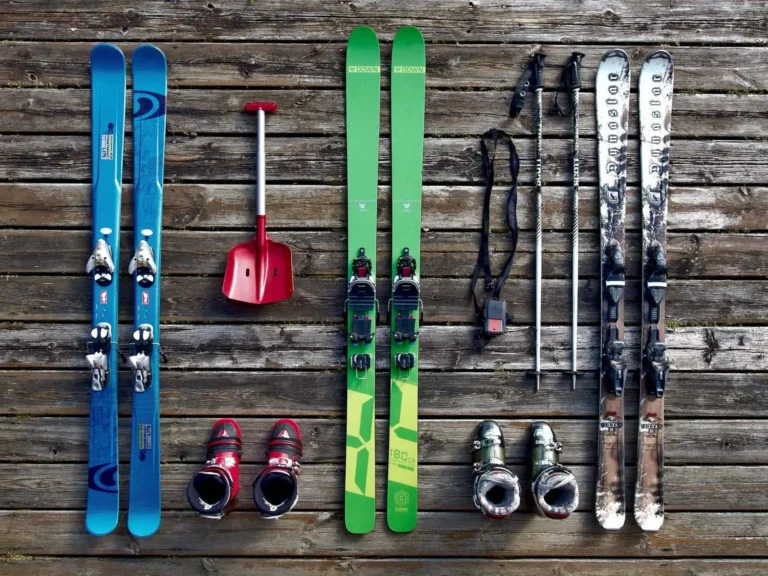
| Category | Typical Waist Width | Primary Characteristic | Optimal Environment |
| Piste/Carving | 65mm – 80mm | High torsional rigidity | Groomed, hard snow |
| All-Mountain Frontside | 82mm – 90mm | Versatile edge-to-edge speed | 70% groomed / 30% off-piste |
| All-Mountain Backside | 92mm – 105mm | Balanced float and grip | 50% groomed / 50% off-piste |
| Freeride/Powder | 108mm – 125mm | High surface area; tapered tips | Deep snow; steep bowls |
| Touring/Backcountry | 85mm – 105mm | Ultra-lightweight construction | Human-powered ascent |
Decision Logic for Categorization
If the primary constraint is “one ski for a week in the Alps,” the logic dictates an All-Mountain Frontside ski. If the constraint is “Pacific Northwest winter,” the logic shifts toward a wider Freeride platform due to the higher moisture content and depth of the snow.
Real-World Scenarios and Operational Constraints
Scenario A: The Hard-Pack Specialist
-
Environment: East Coast North America or early-morning European glaciers.
-
The Choice: A narrow-waisted (75mm) ski with double Titanal layers.
-
Failure Mode: Attempting to use this in 10 inches of fresh snow will result in the ski “diving,” leading to high leg fatigue and potential cartwheeling.
Scenario B: The Tree Glade Navigator
-
Environment: Tight evergreens with varied “bump” formations.
-
The Choice: A mid-waisted ski with significant tail rocker to allow for quick “slashing” or breaking the turn.
-
Second-Order Effect: On the cat-track back to the lodge, this ski may feel “twitchy” or unstable at high speeds due to the shorter effective edge.
Economic Dynamics: Cost and Resource Allocation
Investing in high-end skis involves both capital expenditure and maintenance costs. The “best” option from a financial perspective accounts for the lifespan of the core materials.
| Component | Cost Range (USD) | Longevity Factors |
| Flagship Skis | $700 – $1,300 | Core fatigue (2-5 years) |
| High-DIN Bindings | $250 – $500 | Spring tension reliability |
| Professional Tuning | $50 – $100/session | Edge thickness remaining |
Opportunity Cost: Choosing a specialized powder ski when you only see powder two days a year is a misallocation of capital. The “rental” or “demo” strategy for outlier days often yields a better return on investment than ownership.
Support Systems and Integration
A ski is an inert object without the support systems required to drive it.
-
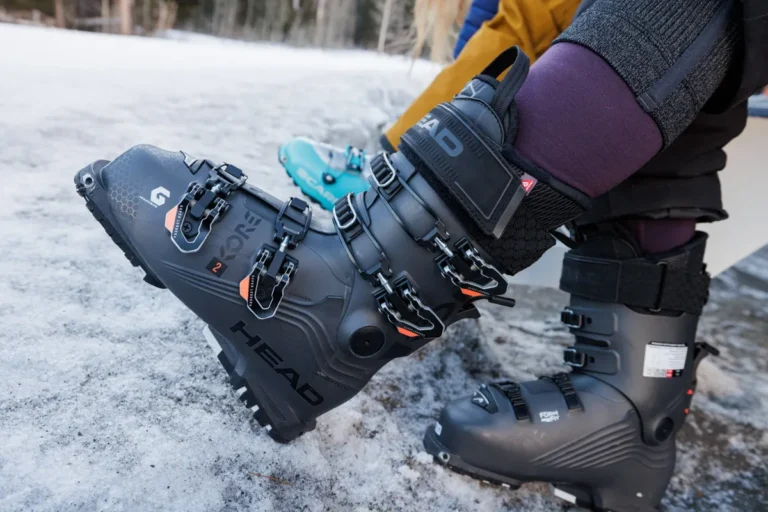
Boot-Binding Interface: The stiffness of the boot must match the ski. A stiff, metal-laden ski paired with a soft, beginner boot creates a “lag” in communication.
-
Edge Geometry: Bevel angles (usually 1 degree base, 2-3 degrees side) determine how “bitey” the ski feels.
-
Wax Chemistry: The interaction between the polyethylene base and the snow temperature is a critical, often overlooked variable.
The Risk Landscape and Failure Modes
The primary risk in selecting from the best ski options is the “Aspiration Gap.” This occurs when a skier buys equipment for the skier they want to be, rather than the skier they are.
-
Over-Stiffness: A ski that is too stiff for the user’s weight will refuse to flex, making it impossible to engage the sidecut. The skier becomes a passenger.
-
Over-Width: Using a wide powder ski on hard-pack puts excessive leverage on the knees, potentially leading to long-term ligament strain.
-
Weight Obsession: In the backcountry, light is right for the uphill, but “chatter” on the downhill can lead to loss of control in icy couloirs.
Maintenance and Long-Term Adaptation
A high-performance ski is a biological-mechanical hybrid that degrades with use.
-
The Review Cycle: After every 10-15 days of use, the base should be checked for “planarity.” A concave or convex base will make a ski feel unpredictable.
-
Storage: Rust is the primary enemy of edge integrity. Dry the edges thoroughly after every session.
-
Adjustment Triggers: If you find yourself consistently leaning back to keep tips afloat, it is time to move toward a more rockered or wider profile.
Measurement, Tracking, and Evaluation
How do you know if you have chosen correctly?
-
Leading Indicator: The absence of mid-turn “chatter” or vibration.
-
Lagging Indicator: Reduced quad fatigue at the end of a full operational day.
-
Qualitative Signal: The ability to change turn shape mid-arc without fighting the ski’s natural radius.
Documentation Example: Keep a “ski log” noting the snow temperature, the specific wax used, and the feeling of edge grip on specific runs. Over time, this data reveals whether your equipment is a bottleneck or an enabler.
Common Misconceptions
-
“Longer is Always More Stable”: Modern materials allow shorter skis to be stiffer and more stable than the “straight skis” of the past.
-
“Carbon is Better”: Carbon is lighter, but it can be “pingy” and harsh. Wood cores reinforced with flax or titanal often provide a smoother ride.
-
“Expensive Skis Make You Better”: They only provide a higher “ceiling.” If your technique is flawed, a high-performance ski will often punish those flaws more severely.
Conclusion: The Synthesis of Choice
The pursuit of the best ski options is ultimately a journey into self-awareness. It requires an honest assessment of one’s physical capabilities, the frequency of specific weather patterns, and an understanding of the physics of snow. There is no ultimate winner—only the most appropriate tool for a specific moment in time. By applying a structured, analytical framework to the selection process, the skier moves from a state of being influenced by marketing to a state of technical command. Mastery lies in the harmony between the human, the machine, and the mountain.