The Science of Glide: Common Ski Waxing Mistakes & How to Avoid Them (2026)
The friction between a polyethylene ski base and the crystalline structure of snow is a laboratory-grade physical interaction that defines the limits of alpine performance. While the act of applying wax is often relegated to the status of a mundane chore, it is, in reality, a sophisticated exercise in thermal management and chemical bonding. The goal is to manipulate the “hydrophobic” properties of the base—ensuring that a micro-film of water is generated to facilitate glide while simultaneously preventing the suction that occurs when that water film becomes too thick or stagnant. To treat this process with anything less than technical rigor is to invite a significant degradation of the equipment’s operational ceiling.
Many practitioners view waxing as a simple “on-and-off” procedure, failing to account for the porosity of sintered bases or the specific temperature windows of various paraffin waxes. This lack of depth leads to a series of technical errors that do more than just slow the skier down; they can lead to “base burn,” where the polyethylene fibers become scorched and lose their capacity to hold wax entirely. When the base loses its health, the ski becomes unpredictable, demanding more physical exertion from the athlete to initiate turns and maintain balance on variable terrain.
A definitive reference for base maintenance must move beyond the “how-to” and into the “why.” It requires an examination of the second-order effects of heat application, the mechanical necessity of scraping, and the atmospheric variables that dictate wax selection. This inquiry establishes a foundational pillar for long-term equipment health, prioritizing intellectual honesty over the transient marketing claims of the wax industry. By understanding the structural root causes of maintenance failure, we can move toward a state of technical readiness where the equipment becomes a transparent facilitator of the mountain experience.
Understanding “common ski waxing mistakes”
The most significant barrier to effective maintenance is the assumption that more wax equals more speed. When we analyze common ski waxing mistakes, we find that the majority of failures occur not during the application, but during the removal and finishing phases. Wax is intended to reside within the pores of the sintered base, not on top of it. A layer of wax left on the surface creates “stiction”—the wax actually sticks to the snow crystals, increasing friction rather than reducing it. The purpose of the iron is to open the pores; the purpose of the scraper and brush is to clear the surface so the physical structure of the base can do its job.
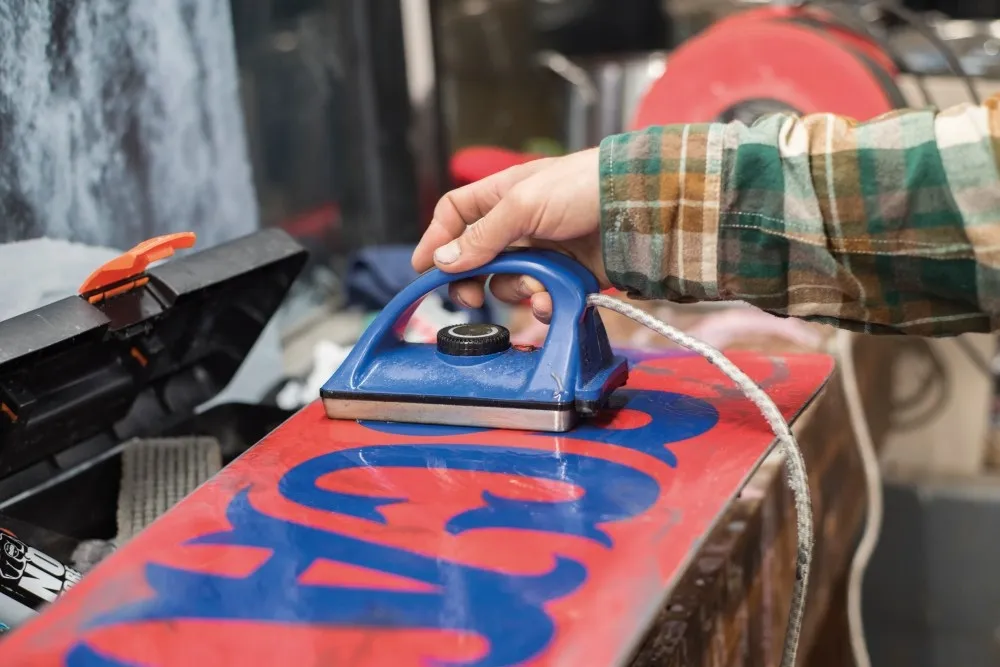
Another layer of misunderstanding involves the temperature of the iron. Many users treat the waxing iron like a household appliance, ignoring the specific melting points of the paraffin. If the iron is too cold, the wax never fully penetrates the base, resulting in a superficial coat that wears off in two runs. If the iron is too hot, it can “cook” the base, a permanent structural failure where the polyethylene pores collapse. This is why a dedicated waxing iron with a thick, stable baseplate is a technical necessity rather than a luxury accessory.
Finally, the environment in which the work is performed is often ignored. Waxing a ski that has just been brought in from a cold car is a recipe for failure. The temperature differential between the frozen core of the ski and the hot iron can lead to “epoxy fatigue” in the ski’s internal layers. Effective maintenance requires a controlled environment where the hardware has had time to reach room temperature, ensuring that the thermal expansion of the base is uniform and the wax can bond correctly at a molecular level.
The Evolution of Base Porosity and Chemical Bond
Modern alpine bases are typically made of UHMW-PE (Ultra-High-Molecular-Weight Polyethylene). Sintered bases, found on high-end hardware, are produced by compressing polyethylene powder under high pressure, leaving microscopic voids between the particles. This is the “porosity” that allows the base to hold wax. Historically, extruded bases—cheaper and non-porous—required little maintenance because they couldn’t absorb wax anyway. The shift to sintered materials changed the “governance” of maintenance, making the wax iron the most important tool in the skier’s arsenal.
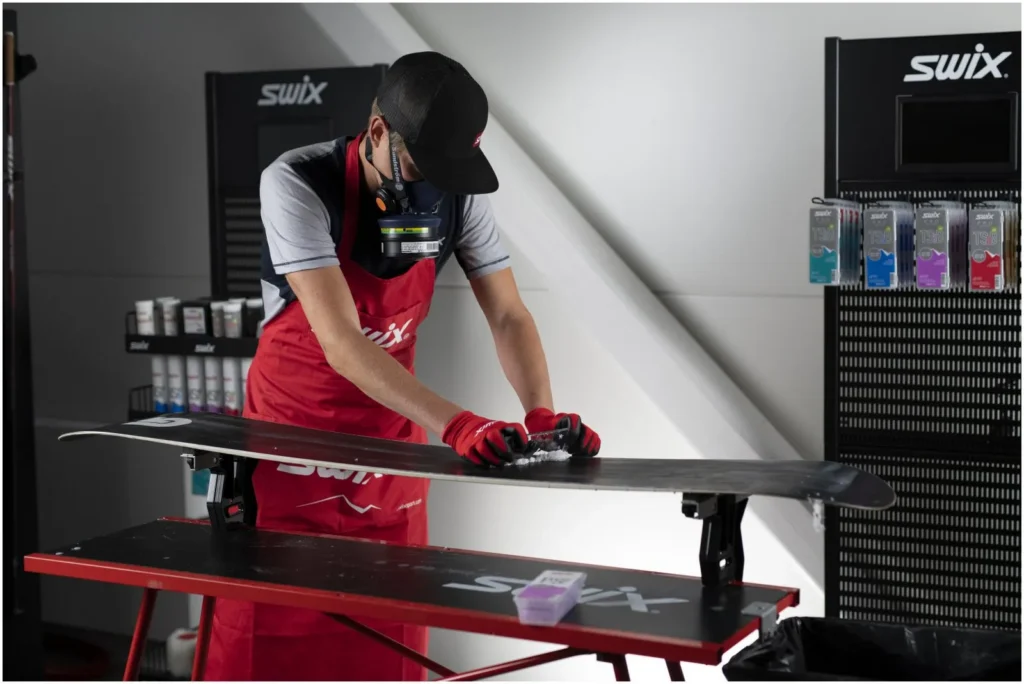
This evolution has introduced a chemical complexity that was absent in the early days of the sport. We now deal with various paraffin hardnesses, hydrocarbon mixtures, and the (increasingly regulated) use of fluorocarbons. Each of these chemicals interacts with the snow’s crystalline structure differently. A hard wax designed for -20°C creates a durable, abrasive-resistant surface, whereas a soft wax for 0°C focuses on repelling the heavy moisture found in spring snow. Understanding this trajectory helps the practitioner realize that maintenance is a seasonal dialogue with the atmosphere, not a static task.
Conceptual Frameworks for Thermal Management
To navigate the intricacies of base saturation, three primary mental models can be applied.
1. The Dwell-Time Equilibrium
The base needs time to absorb wax, but the core must be protected from heat.
-
The Frame: The iron must keep moving. A “slow and steady” pass is better than multiple rapid passes, but staying in one spot for more than a few seconds risks permanent delamination.
2. The Hydrophobic/Structure Interface
Waxing reduces friction, but “structure” (the microscopic grooves in the base) manages water suction.
-
The Frame: If you wax over a dirty base or fail to brush properly after waxing, you fill in the structure. This creates a “suction cup” effect on wet snow, making the ski feel sluggish despite being “freshly waxed.”
3. The Molecular Memory Model
The base “remembers” its thermal history. Frequently waxing a ski at the correct temperature actually improves its long-term glide by keeping the pores open and active.
-
The Frame: View waxing as “feeding” the base. A neglected base becomes “starved” and eventually “dead,” losing its ability to absorb even the highest-quality paraffins.
Taxonomy of Maintenance Errors and Strategic Trade-offs
Identifying common ski waxing mistakes requires a categorical look at the lifecycle of a maintenance session.
| Error Category | Mechanism of Failure | Performance Impact | Corrective Strategy |
| Insufficient Scraping | Surface wax creates drag | Heavy, “sticky” sensation | Scrape until no more wax comes off |
| Overheating (Flash) | Pores collapse/Epoxy melts | Permanent “base burn” | Use a digital iron; monitor smoke |
| Incorrect Wax Grade | Temperature mismatch | Rapid wear or suction | Match wax to snow, not air temp |
| Dirty Base Waxing | Ironing dirt into pores | Abrasive base; slow glide | Use a base cleaner or “hot scrape” |
| Neglecting Brushing | Structure remains clogged | Poor performance in wet snow | Use stiff nylon followed by horsehair |
Decision Logic for Application
When in doubt, it is safer to use a wax that is “too hard” than one that is “too soft.” A hard wax will simply be a bit slower in warm snow, but a soft wax in cold, abrasive snow will be stripped off the base in an hour, leaving the polyethylene vulnerable to abrasion.
Real-World Scenarios and Operational Constraints
Scenario A: The “Living Room” Wax Session
-
The Error: Waxing in a cold garage or immediately after a ski day.
-
Constraint: Thermal shock to the ski’s core.
-
Result: The wax “pops” off the base in sheets because the base wasn’t warm enough to receive it.
-
Lesson: Always allow the hardware to acclimatize to room temperature for at least 4 hours before applying heat.
Scenario B: The “More is Better” Scraping
-
The Error: Thinking that leaving a little wax on the base will make it last longer.
-
Constraint: Snow crystal interaction.
-
Result: The “extra” wax is shredded by the ice, creating a jagged surface that kills glide.
-
Lesson: You cannot leave too little wax on the surface; you can only leave too little wax in the pores.
Economics: The Cost of Improper Application
The financial impact of maintenance errors is often buried in the shortened lifespan of the asset.
| Resource | Unit Cost (USD) | Loss Due to Error | Economic Character |
| High-Performance Wax | $20 – $80 / block | 100% loss if ironed too hot | Consumable capital |
| Digital Waxing Iron | $100 – $180 | N/A (Prevents loss) | Safety/Insurance Asset |
| Base Material (P-Tex) | Part of $800+ ski | Permanent if “burned” | Irreplaceable Core Asset |
| Professional Stone Grind | $50 – $80 | Required to fix “burn” | Remedial Expense |
Opportunity Cost Analysis: Saving $50 by using a household clothing iron instead of a dedicated waxing iron is a false economy. The lack of temperature stability in a clothing iron is the leading cause of “base burn,” which can effectively destroy an $800 pair of skis in a single session.
Support Systems: Integration and Technical Tuning
A robust maintenance plan relies on a synchronized set of tools.
-
The True Bar: A precision steel bar used to check if the base is flat. Waxing a “railed” or “concave” ski will never yield perfect results.
-
Brass/Steel Brushes: Used before waxing to open up the pores and remove old, oxidized wax.
-
Horsehair Brushes: The final “polish” step to ensure the microscopic structure is clear.
-
Base Cleaners: Citrus-based solvents used to remove grease and oils before fresh application.
-
The Scraper Sharpener: A dull scraper is the primary reason people fail to remove enough surface wax.
The Risk Landscape: Compounding Failure Modes
The danger in maintenance is rarely a single mistake, but a taxonomy of errors that compound over time.
-
The Oxidation Cycle: Neglecting to wax leads to dry bases. Dry bases lead to “base burn.” Base burn requires a stone grind. A stone grind makes the base thinner. Eventually, the ski has no base left to grind.
-
The Structural Suction: Failing to brush out the structure in spring conditions leads to “gluing” the ski to the snow. The skier over-corrects with their knees, leading to increased joint strain and potential ligament injury.
-
The Smoke Signal: If the iron is producing smoke, you are chemically altering the wax and potentially the base. This “over-cooking” creates a brittle surface that chips easily.
Governance, Maintenance, and Long-Term Adaptation
Preserving a high-performance base requires a disciplined “Review Cycle.”
-
Daily Audit: After every ski day, look for “white” or “fuzzy” areas near the edges. This is the first sign of wax depletion and oxidation.
-
The 10-Day Deep Clean: Every ten days of skiing, perform a “hot scrape” (apply soft wax and scrape it off while still liquid) to pull deep-seated impurities out of the pores.
-
Seasonal Storage: At the end of winter, apply a thick layer of soft “storage wax” and do not scrape it. This seals the base against the humidity and oxygen of the summer months, preventing the pores from “closing” permanently.
Metrics of Performance: Quantitative vs. Qualitative
How do you track the success of your maintenance?
-
Leading Indicator: The “Drip Test.” How evenly does the wax melt across the iron? If it smokes or beads up instantly, the temperature is wrong.
-
Lagging Indicator: The “Friction Fade.” How many hours can you ski before the base starts to look white? A well-saturated base will stay “black and healthy” longer than a poorly maintained one.
-
Qualitative Signal: The “Feel” on the flats. A properly waxed and brushed ski will glide silently on the flats, whereas a poorly maintained one will feel “grabby” or make a slight whistling sound as the water suction builds up.
Systemic Misconceptions and Industry Myths
-
“I use liquid wax so I don’t need to iron”: Liquid waxes are “surface-only” treatments. They are great for a mid-day boost, but they do not penetrate the pores and offer zero base protection against abrasion.
-
“Household irons are fine”: As discussed, the temperature “swing” on a clothing iron can be 30-40 degrees. This is the primary cause of scorched P-Tex.
-
“You don’t need to wax new skis”: Factory wax is a “storage wax” meant to prevent oxidation in the warehouse. It is usually a cheap, universal paraffin that wears off in three runs.
-
“Brushing is optional”: If you don’t brush, you haven’t finished the job. Brushing is what defines the “structure” that prevents suction.
-
“Fluoros are better”: While they were faster in wet snow, they are environmentally toxic and now banned in most competitive circuits. Modern “High-Speed” paraffins are nearly as fast without the ecological damage.
The Synthesis of Technical Readiness
Managing a high-performance alpine base is an exercise in intellectual honesty. It requires a rejection of “shortcuts” in favor of a disciplined, thermal-based approach. When the base is properly saturated, scraped, and brushed, the interaction with the snow becomes a source of efficiency rather than a bottleneck of friction. By avoiding common ski waxing mistakes, the practitioner ensures that their equipment remains a precision tool, capable of responding to the tactical demands of the mountain with predictability and grace. Maintenance is not an interruption of the sport; it is the foundation upon which the sport is built.